
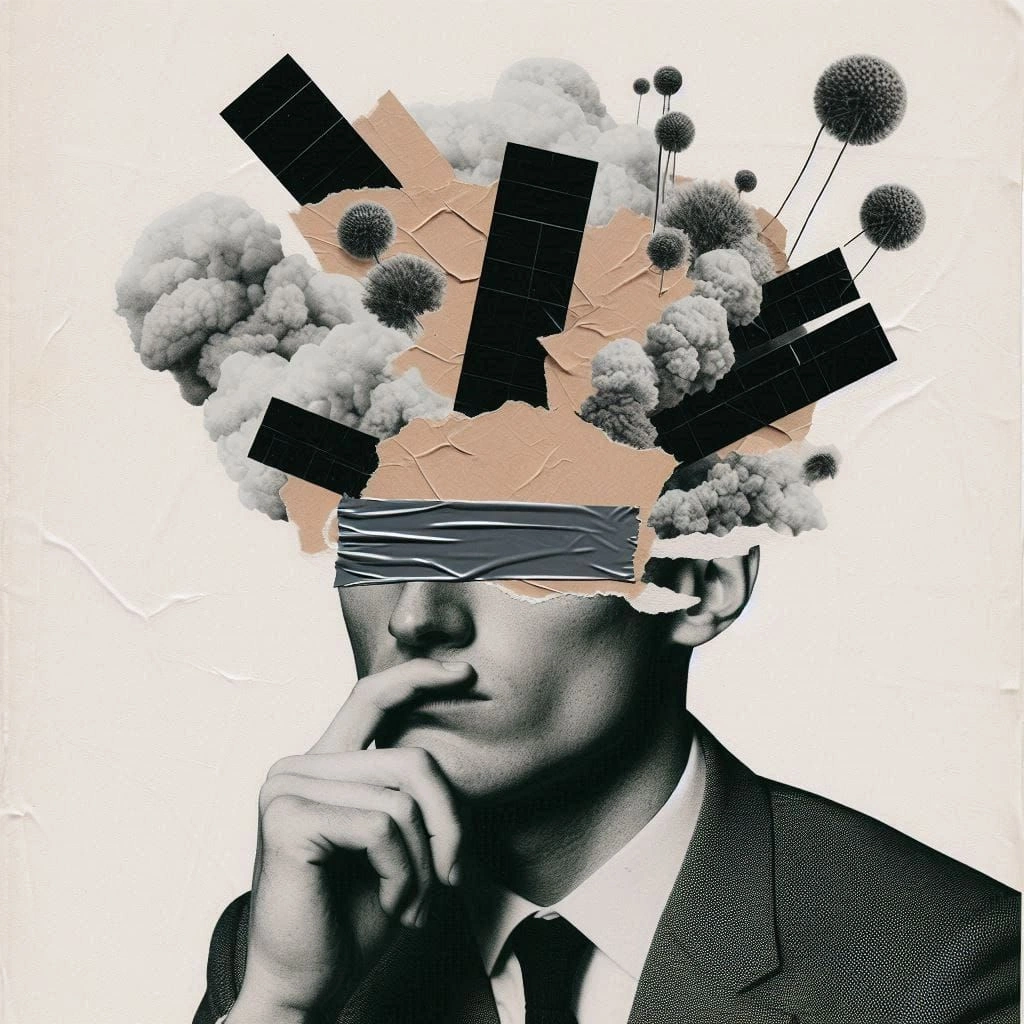
We have become incredibly good at understanding our bodies. We track our sleep, heart rate, steps, workouts, recovery, and strain. We can open an app and see how our bodies have responded to the last day, week, month, or even year. That information doesn’t live our lives for us. It doesn’t sleep for us, train for us, or make our decisions. It simply makes something that was once difficult to see a little more visible. And that made me wonder: what if we could do something similar for our minds?
We can look at a graph and understand how our body has changed. But ask yourself how your mind has changed over the last six months, and the answer becomes much harder.
We remember moments. We rarely see the pattern.
If someone asks how you’ve been feeling lately, you can probably answer. Maybe this week has been stressful. Maybe you’ve been motivated. Maybe something has been sitting in the back of your mind. Maybe you’ve felt unusually clear. But zoom out. What kept coming up three months ago? What have you repeatedly worried about? Which goals have stayed important to you? What situations consistently leave you energized? What keeps pulling you away from the person you want to be?
Those questions become much harder to answer. Our inner lives generate an enormous amount of information, but most of it disappears into memory. We remember the loud moments, but we rarely see the quiet patterns connecting them.
The WHOOP comparison
As an athlete, I’ve spent years around performance data. Tools like WHOOP made an idea feel normal that might once have sounded obsessive: your body is constantly giving you signals, and seeing those signals over time can help you understand yourself better. WHOOP doesn’t recover for you. It doesn’t sleep for you. It doesn’t train for you. It simply gives you another way to understand what your body has been telling you.
The goal isn’t to score your mind. The goal is to make your own patterns easier to see.
Your conversations already contain signals.
Every time we talk honestly, we leave clues about what matters to us. The subjects we keep returning to. The words we use when we’re excited. The goals that keep appearing. The same frustration described five different ways. The idea we can’t stop thinking about. The thing we said we were going to do and quietly stopped mentioning. One conversation may not mean very much on its own, but a hundred conversations can begin to tell a story. What if you could see that story? Not as a diagnosis. Not as an AI deciding who you are. But as a reflection built from the things you chose to say. What have I been talking about most lately? What consistently seems to make me feel better? What keeps creating stress? Which goals have stayed important to me? What have I been avoiding? Has the way I talk about something changed? What did I realize months ago that I might need to hear again? Those are the kinds of questions that interest me.
From tracking to understanding
This is the direction I want LOOM to explore. You should be able to talk when something is on your mind, whether that’s a two-minute voice dump after practice, a longer conversation late at night, an idea you don’t want to lose, or simply one of those moments when there’s too much happening in your head and you need somewhere to put it. In that moment, LOOM can help you slow the noise down and think through it. But over time, something much more interesting becomes possible: those conversations can begin to connect. A goal mentioned today can relate to something you said weeks ago. A recurring thought can become visible. A good idea can come back before it’s forgotten. Something you once struggled with might slowly stop appearing. A pattern can be surfaced while it’s still useful. The value isn’t in collecting more data about yourself just for the sake of having data. The value is turning scattered moments into understanding.
AI shouldn’t tell you who you are.
There is another version of this idea that I don’t like: technology constantly judging you, labeling every emotion, scoring every conversation, and telling you what kind of person you are. I don’t want LOOM to become that. I believe people are capable of understanding themselves. Most of the time, the answer isn’t hidden inside an algorithm. It’s already somewhere inside the person. Technology should help create the conditions for that answer to become clearer. Ask a better question. Bring back something important. Show you a pattern you might have missed. Give you room to speak without needing to make perfect sense. Then let you decide what it means.
Technology shouldn’t become the authority on your inner life. It should help you become more aware of it.
A different kind of progress
Physical progress is often easy to imagine: run faster, lift more, recover better, sleep longer. Progress in our inner lives is different. Maybe you start recognizing pressure before it overwhelms you. Maybe you stop repeating the same argument with yourself. Maybe you realize that something you obsessed over six months ago barely appears in your thoughts anymore. Maybe you become more confident, understand what consistently brings out the best in you, or watch a goal that once felt impossible slowly become part of your normal life. Those changes are real, even when they’re difficult to measure. I want LOOM to help make them easier to notice. Not because every thought needs to become a metric, and not because your mind needs another dashboard, but because there’s something powerful about being able to look back and realize: I understand myself better than I did before.
Imagine WHOOP for the mind.
Your mind isn’t a wearable, and mental clarity isn’t a recovery score. But the underlying idea is something I keep coming back to. We’ve built extraordinary tools for understanding what’s happening in our bodies. I think we can build better tools for understanding what’s happening within us, too. Tools that remember without defining us. Tools that notice without judging us. Tools that ask instead of command. Tools that help us see the connections between hundreds of thoughts, conversations, goals, emotions, and moments that would otherwise disappear into memory. Not something that thinks for you. Something that helps you see your own thinking more clearly. That’s the kind of tool I want LOOM to become.